

Posted by Lucent Team

TL;DR:
- Energy dips often stem from nutrient deficiencies dehydration poor sleep stress and poor meal habits.
- Building a routine of consistent sleep hydration balanced nutrition movement and self-observation enhances sustained energy.
- Personalizing your energy protocol through experimentation and tracking is more effective than generic plans.
Most working adults know the feeling well. You push through a productive morning, then 2 p.m. hits and your focus evaporates. The temptation is to reach for something sweet or another cup of coffee, but that path leads to a sharp spike and an even harder crash later. Sustainable energy does not come from a quick fix. It comes from understanding what your body actually needs and building habits that keep you sharp, clear, and steady throughout the entire day. This guide walks you through the root causes of energy dips, the daily habits that address them, and how to know when your new routine is actually working.
Table of Contents
- Understanding the root causes of energy dips
- Prepare your system: Sleep, hydration, and nutrients
- Execute daily energy habits: Nutrition and movement routines
- Troubleshoot: Common mistakes and energy drainers
- Verification: How to know your energy protocol is working
- The overlooked secret: Build your own energy protocol
- Achieve all-day focus with natural solutions
- Frequently asked questions
Key Takeaways
| Point | Details |
|---|---|
| Balance is key | Combining nutrition, sleep, hydration, and movement leads to sustainable energy. |
| Avoid quick fixes | Relying on sugar or caffeine brings short-lived boosts and eventual crashes. |
| Focus on routines | Simple daily habits—balanced meals, movement, and protein snacks—deliver steady focus all day. |
| Personalize your approach | Experiment with timing and foods to discover what best sustains your individual energy. |
Understanding the root causes of energy dips
Now that we’ve framed the core challenge, it’s vital to understand the underlying causes behind energy issues. You cannot fix something you do not understand, and most people are solving the wrong problem. They chase caffeine when their real issue is poor sleep or a missing nutrient.
Your body converts food into cellular energy through a tightly coordinated process. Disrupt any part of that system and you will feel it. Nutrient deficiencies in iron, magnesium, B vitamins, and vitamin D directly impair that process. Iron deficiency reduces oxygen delivery to cells, triggering fatigue. Magnesium helps break glucose down into usable energy, and 48% of US adults fall short of their daily magnesium needs.
Did you know? Nearly half of all American adults may not be getting enough magnesium, one of the most essential minerals for producing cellular energy.
Dehydration is another underestimated factor. Even mild dehydration measurably impairs cognitive performance and mood, and forces your heart to work harder to circulate blood. Most people do not notice mild dehydration until it has already blunted their mental edge.
The top root causes of energy dips:
- Magnesium, iron, or B vitamin deficiencies
- Chronic mild dehydration
- Unbalanced meals heavy in simple carbohydrates
- Poor or inconsistent sleep patterns
- Prolonged sitting with little physical movement
- Unmanaged or chronic stress
- Skipping meals or going too long without eating
Stress is worth calling out specifically. When cortisol stays elevated for too long, your body burns through energy reserves faster than normal. This is why high-pressure workweeks often leave you feeling drained even when you slept eight hours.
Pro Tip: Before starting any new supplement routine, ask your doctor to test your iron, magnesium, and vitamin D levels. Supplementing without knowing your baseline is guesswork and can sometimes do more harm than good.
Prepare your system: Sleep, hydration, and nutrients
Knowing what drains your energy, it’s time to build a foundation for sustained alertness. Think of this section as laying the groundwork before you build the structure.
Sleep is non-negotiable. Most adults need between seven and nine hours, and consistent sleep schedules with fixed wake times and morning sunlight exposure help regulate your circadian rhythm. That rhythm controls when your body naturally peaks in alertness and when it winds down. A chaotic sleep schedule scrambles those signals and makes energy management nearly impossible.
Hydration starts before your first meal. Drinking a full glass of water first thing in the morning helps your body shift out of its overnight fasting state and supports blood volume, which directly affects how alert you feel. Continue hydrating consistently throughout the day rather than in large amounts at once.
Nutrition is the third pillar. Leafy greens supply magnesium and folate. Eggs and fish deliver B vitamins and protein. Oats and legumes offer slow-digesting carbohydrates that release glucose steadily rather than in a single surge.
Your foundation checklist:
- Sleep 7 to 9 hours with a consistent wake time
- Expose yourself to natural light within 30 minutes of waking
- Drink 16 ounces of water before coffee or food
- Eat a balanced breakfast with protein, fat, and complex carbs
- Include leafy greens, eggs, nuts, or fish at least once daily
- Limit processed foods that spike and crash blood sugar
Pro Tip: Pair your first glass of morning water with a protein-rich breakfast like eggs or Greek yogurt. This combination supports your metabolism and helps stabilize blood sugar from the start of the day, which creates a smoother energy curve going into mid-morning.
One important caution: do not rush to supplement before you know what you actually need. Iron overload from unnecessary supplementation can damage organs. Real food first, testing second, supplements only when indicated.
Execute daily energy habits: Nutrition and movement routines
With your body primed, here’s how to structure your day for long-lasting energy. The secret is rhythm. Not perfection, just consistency.

Complex carbohydrates, lean proteins, and healthy fats like oatmeal, nuts, and yogurt release energy steadily, unlike simple sugars that spike glucose and leave you crashing within an hour. Timing your meals every three to four hours keeps your blood sugar in a stable range throughout the day.
Movement is equally important. A 10 to 20 minute walk after lunch boosts circulation, supports mitochondrial efficiency, and increases alertness for two to four hours afterward. This is not just a wellness tip. It is one of the most reliable tools for beating the afternoon slump without stimulants.
Your daily energy routine:
- Wake at a consistent time and hydrate immediately
- Eat a balanced breakfast within one hour of waking
- Work in 90-minute focus blocks with short breaks between them
- Have a protein-forward snack (nuts, yogurt, boiled egg) every 3 to 4 hours
- Take a 10 to 20 minute walk after lunch
- Avoid heavy, carbohydrate-dense lunches that cause post-meal fatigue
- Wind down screens 60 minutes before bed
| Time | Meal or activity | Purpose |
|---|---|---|
| 7:00 a.m. | Water or Lucent + eggs or oatmeal | Hydrate and stabilize blood sugar |
| 10:30 a.m. | Handful of nuts or yogurt | Prevent mid-morning dip |
| 1:00 p.m. | Lean protein + veggies + whole grains | Sustain afternoon energy |
| 1:30 p.m. | 15-minute walk | Boost circulation and alertness |
| 3:30 p.m. | Lucent | Bridge to end of workday |
| 7:00 p.m. | Light dinner | Avoid heavy digestion before sleep |
If you want to understand how your beverage choices affect energy, exploring drink benefits for steady energy and reading a breakdown of matcha vs coffee vs energy drinks can sharpen your thinking here.
Pro Tip: Prep protein-forward snacks the night before so they are ready to grab during the workday. When hunger hits and you have nothing prepared, simple sugars become the easy default.
Troubleshoot: Common mistakes and energy drainers
Even the best routine can be derailed by small missteps. Here’s how to stay on track.
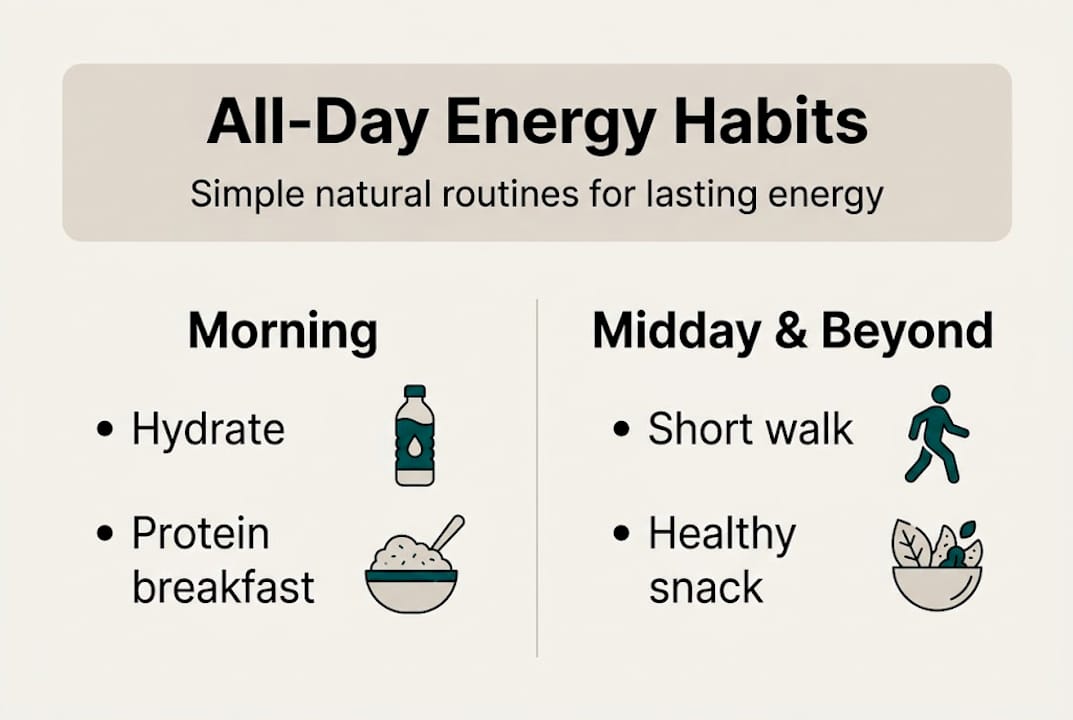
The most common sabotage comes from sources that feel harmless. A flavored yogurt loaded with added sugar. A “healthy” granola bar that spikes insulin. An extra hour of screen time at night that quietly wrecks sleep quality. These small choices compound over time.
Hidden energy drainers to watch for:
- Simple sugars disguised in “healthy” packaged foods
- Inconsistent meal timing that lets blood sugar drop too far
- Naps longer than 30 minutes that disrupt nighttime sleep
- Excessive screen exposure after 9 p.m.
- Over-supplementing without testing first
- Skipping movement breaks during long work sessions
Protein-forward snacks every 3 to 4 hours and post-meal walks are among the most effective tools for professionals to prevent afternoon slumps and sustain productivity during 90-minute focus blocks.
| Healthy habit | Energy-draining alternative |
|---|---|
| Oats with nuts for breakfast | Sugary cereal or pastry |
| 20-minute post-lunch walk | Sitting through the afternoon |
| Consistent 7 a.m. wake time | Variable sleep and wake schedule |
| Water throughout the day | Coffee as primary hydration |
| 20-minute nap if needed | 60-minute nap that disrupts sleep |
On supplements: iron overload from unnecessary supplementation can damage organs and create new problems on top of the ones you are trying to solve. The same logic applies to naps. A 20-minute nap can sharpen your afternoon. A 90-minute nap can leave you groggy and make it harder to fall asleep at night.
For a deeper look at how natural compounds support focus without overstimulation, the science behind green tea and focus is worth understanding.
Pro Tip: Set a timer when you nap. Twenty minutes is the sweet spot. You get the restorative benefit without entering deep sleep, which is where the grogginess comes from.
Verification: How to know your energy protocol is working
Applying new routines is powerful, but how do you know it’s working?
Progress in energy management is not always dramatic. It shows up quietly. You notice you did not hit a wall at 2:30 p.m. You realize you have not craved a candy bar at 4 p.m. this week. Your mood in the afternoon feels more even. These are meaningful signals.
A systems approach combining sleep, nutrition, movement, and stress management creates a self-reinforcing energy loop. Single changes give you quick wins. The full protocol delivers sustained, long-term performance. That is the goal.
Indicators your energy protocol is working:
- No mid-afternoon energy crash between 1 p.m. and 3 p.m.
- Steady mood without irritability or brain fog
- High focus quality during late-afternoon work sessions
- Reduced cravings for sugar or stimulants
- Faster recovery after exercise
- Falling asleep easily and waking rested
Track these signals week over week, not day by day. One rough Thursday does not mean your system is broken. Look for trends across seven to ten days. If three or four of the above indicators are improving, your protocol is working.
A practical self-check: rate your afternoon focus on a scale of one to ten each day for two weeks. If the average goes from five to seven, that is real progress. Simple. Measurable. Meaningful.
For those exploring how specific compounds support mental performance, the research on biohacker green tea tips offers some compelling insight into why many high-performers are moving away from traditional caffeine.
The overlooked secret: Build your own energy protocol
Most energy guides hand you a generic plan and call it done. Follow these five steps. Drink this. Eat that. The problem is that energy is deeply personal. Your circadian rhythm, stress load, gut health, and daily schedule shape how you respond to any given habit.
What we have seen, both through research and real-world feedback, is that the people who sustain high energy long-term are not the ones who found the perfect hack. They are the ones who stayed curious about their own patterns.
The real lesson: no single strategy beats a personalized system built from honest self-observation.
Try adjusting your meal timing by 30 minutes and notice how your afternoon focus changes. Experiment with a post-lunch walk on some days but not others. Keep a simple log. You will learn more about your own energy in two weeks of intentional observation than from any article, including this one.
Sustainable energy is not a destination you arrive at. It is a system you keep refining. And the more you pay attention, the easier it gets to stay sharp, calm, and clear all day long.
Achieve all-day focus with natural solutions
If you’ve built a strong foundation with sleep, nutrition, and movement, you may still find certain parts of your day benefit from an extra lift. That’s where a clean, functional beverage can fit naturally into your routine.
Lucent Matcha Energy Drink is built around high-quality Japanese matcha, delivering caffeine and L-theanine together for a steady, calm form of alertness without sugar or artificial additives. It supports the kind of focused, unhurried clarity that complements a well-structured day. You can explore the full benefits of Lucent or try the Lucent Mixed Pack to find which formula fits your routine best. No spikes. No crashes. Just clean, sustained energy that works with the habits you’ve already built.
Frequently asked questions
What is the best food to naturally boost energy?
Complex carbs, protein, and healthy fats like oatmeal, nuts, and yogurt deliver steady, lasting energy without the spike-and-crash cycle of simple sugars.
How much water should I drink each day for energy?
Aim for at least eight 8-ounce glasses daily, spread throughout the day, since even mild dehydration impairs cognitive performance and mood.
How can I avoid an afternoon energy slump naturally?
A protein-rich snack, a short walk after lunch, and consistent hydration are your most reliable tools. Snacks every 3 to 4 hours and post-meal movement are especially effective for professionals.
Can supplements help my energy naturally?
They can, but only if you have a confirmed deficiency. Iron overload from unnecessary supplementation can damage organs, so always test your levels before adding anything to your routine.
Recommended
- Why Lucent Works | Matcha, Green Tea & Brain Nutrients
- Matcha Energy vs Coffee vs Energy Drinks: Which Is Best for Focus? – Lucent
- Why Biohackers Use Green Tea for Focus and Energy – Lucent
- Lucent | Matcha Energy Drink for Focus | Zero Sugar
- Healthy vegan snack ideas for work: easy and energising – PopCornaa
- How energy gum works: fast, healthy energy in 5 min – Scandi Gum















